Stockholm's perch on the edge of the Baltic Sea provides an indeal location for competitive sailors and fans alike
News —
Bluewater Turns Baltic Sea Water into Drinking Water at Stockholm Sailing World Championship
Swedish water technology company demonstrates water resilience as the world’s top team racers compete in Stockholm
STOCKHOLM, Sweden, 14 August 2026 — As some of the world’s best sailors compete for the Team Racing World Championship in central Stockholm, Swedish water technology company Bluewater is demonstrating a very different kind of performance: turning water drawn directly from the Baltic Sea into safe, fresh drinking water.
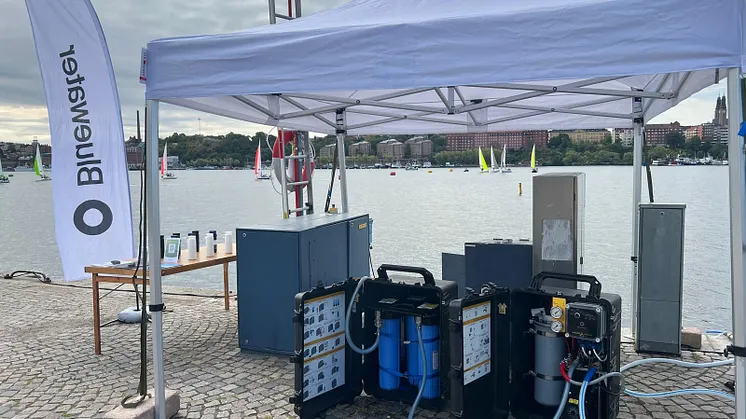
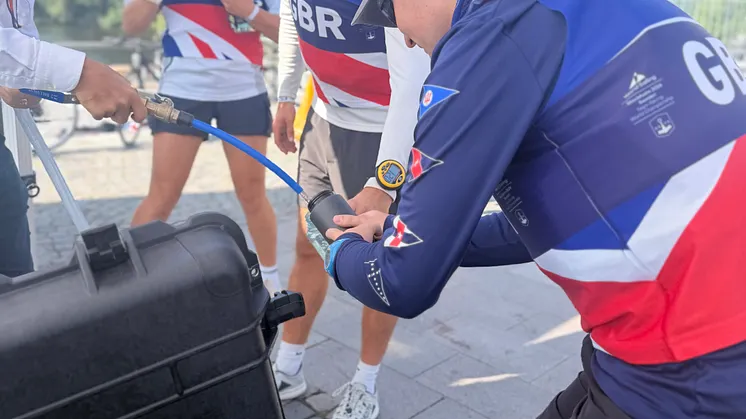
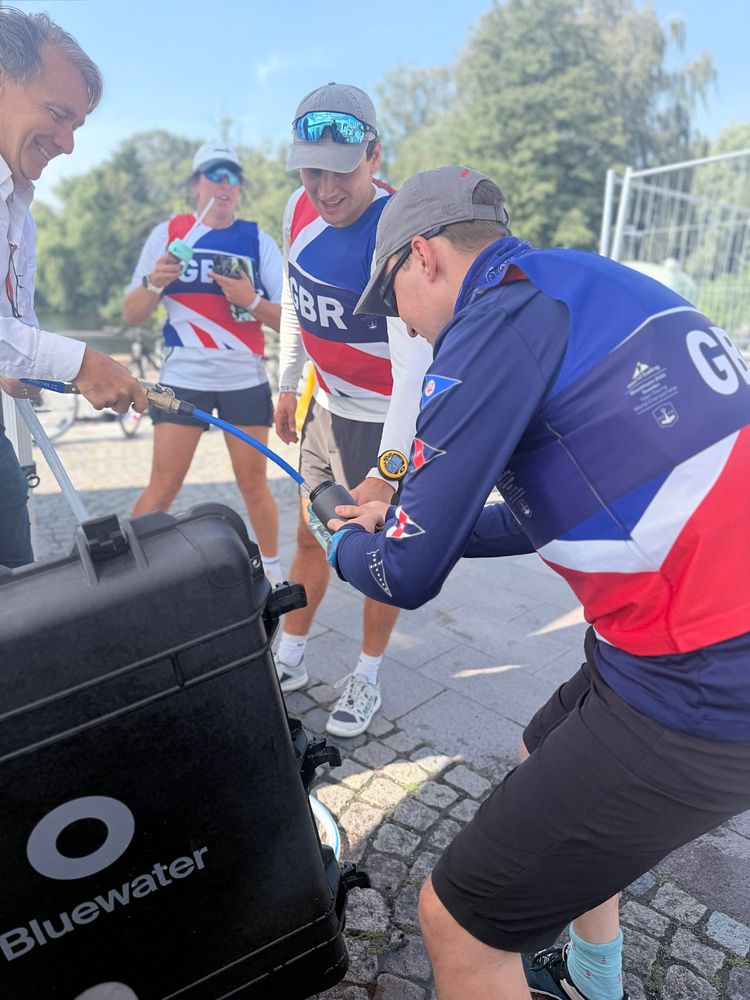
Bluewater’s Emergency Water Station (EWS) is providing drinking water for sailing crews, spectators and visitors during the championship on Riddarfjärden, beside Stockholm City Hall.
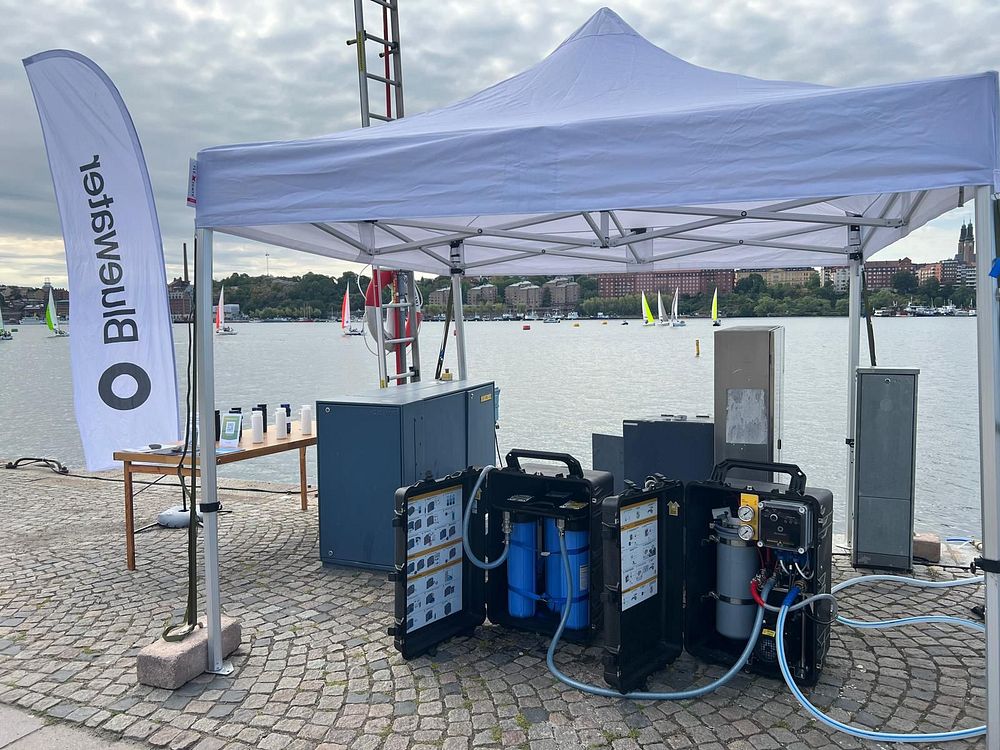
The proprietary Bluewater EWS system packs into two rugged cases for rapid deployment almost anywhere, using a multi-stage purification process, including reverse osmosis, to transform locally available water into safe, fresh drinking water. It can produce large volumes at the point of need, giving communities, emergency services and organizations a powerful, flexible source of clean water without the need for fixed infrastructure or transporting bottled water.
For Bluewater founder and CEO Bengt Rittri, the demonstration comes at a time when access to clean water is becoming an increasingly important issue for communities worldwide.
“We are moving into a period when both water availability and water quality are coming under increasing pressure. Europe is already experiencing extreme temperatures, drought and devastating wildfires. No one needs a science degree to understand that society has to prepare for a more challenging future — and water resilience has to be part of that preparation.”
The championship brings together 12 national teams and 96 sailors competing in fast-paced two-boat-against-two-boat racing in identical J/80 keelboats. The format demands speed, precision and teamwork — but it is the water beneath the boats that Bluewater has put in the spotlight.
Stockholm is built around water, yet the Baltic Sea is one of the world’s most environmentally challenged marine environments, affected by pollution, eutrophication, hazardous substances and marine litter.
Bluewater’s portable Emergency Water Station demonstrates how locally available water can be purified at the point of need, rather than relying on water transported in bottles.
The system uses multiple stages of purification, including advanced reverse osmosis, to remove contaminants and produce drinking water. Designed for rapid deployment, the rugged unit can produce up to 20,000 liters of purified water a day.
A model for water resilience
The potential of distributed water purification becomes particularly striking when applied to a Stockholm community.
Kungsholmen, where the championship is taking place, has approximately 71,600 residents. If each person requires two litres of drinking water a day, the district would need around 143,200 litres.
A purification unit producing 10 litres a minute could deliver approximately 14,400 litres a day. On that basis, 10 units could theoretically provide two litres of drinking water per day for every resident of Kungsholmen. The calculation is not intended to replace Stockholm’s municipal water system. Rather, it illustrates how distributed purification could strengthen resilience if conventional infrastructure is disrupted.
Bluewater says the Swedish Armed Forces have recently placed a substantial order for Emergency Water Stations, including a specialized version designed to operate in polar environments and extremely low temperatures. The company is also reporting fast growing interest from military, civil defense, and police organizations internationally.
Rittri says the issue ultimately extends beyond technology.
“We cannot live without water. Yet we continue to pollute our water resources, waste wate,r and underinvest in the infrastructure needed to protect them. We need to act now to protect our children, grandchildren and future generations from a water crisis that could become impossible to manage.”
At the Stockholm championship, Bluewater is offering a practical demonstration of that philosophy: water can be purified where it is found, and safe drinking water delivered where people need it.